All Categories
Featured
Rather than marking a cyclical rebound, 2026 is progressively deemed a combination year, in which diversification-led growth becomes more deeply ingrained in the area's financial model, lowering reliance on hydrocarbons and increasing resilience to external shocks. Projections from major organizations broadly converge on a stronger GCC development profile in 2026 than in 2025, supported by resistant domestic demand, continued non-oil expansion, and (to differing degrees) a firmer hydrocarbon contribution.
3.2 percent development in 2025, accelerating to 4.5 percent in 2026. Sees momentum improving, with GCC output growth predicted to increase from 1.7 percent in 2024 to 3.3 percent on average in 2025, reflecting a shift toward more favorable overall conditions.
Reviewing New GCC Data for Strategic InsightsThe IMF's World Economic Outlook (October 2025) jobs worldwide development reducing to 3.1 percent in 2026, with sophisticated economies around 1.5 percent and emerging market and establishing economies just above 4 percent. On that contrast, a 4.44.5 percent GCC growth would put the area materially ahead of the world average and a little above (or broadly in line with) the emerging-market aggregate, reinforcing the GCC's status as a reasonably high-growth pocketprovided that local threat conditions remain included and reform momentum holds.
Information from the GCC Statistical Center show that non-oil sectors already represent more than 73 percent of total GDP, a share that has actually continued to rise as governments broaden investment in services, infrastructure, and technology. According to Oxford Economics, non-energy activity across the GCC is forecasted to grow by around 4.1 percent in 2026, supported by strong labor markets, improving credit conditions, and increasing investment in technology and AI-related facilities.

The Operational Advantages of Deep Market Intelligence
Public-sector investment and reform stay main to sustaining this trend. Policy procedures focused on drawing in foreign direct investment, reducing foreign ownership rules, broadening capital markets, and supporting private-sector involvement continue to underpin non-oil expansion and minimize the region's exposure to oil price volatility. While hydrocarbons no longer control the development outlook, oil earnings are anticipated to play a helpful function in 2026.
Oxford Economics anticipates Brent crude rates to fall listed below USD 60 per barrel in early 2026, limiting the near-term contribution of oil extraction to GDP. Oil supply is forecast to rise again in the 2nd half of the year, with a complete unwinding of remaining production caps likely by mid-2027.
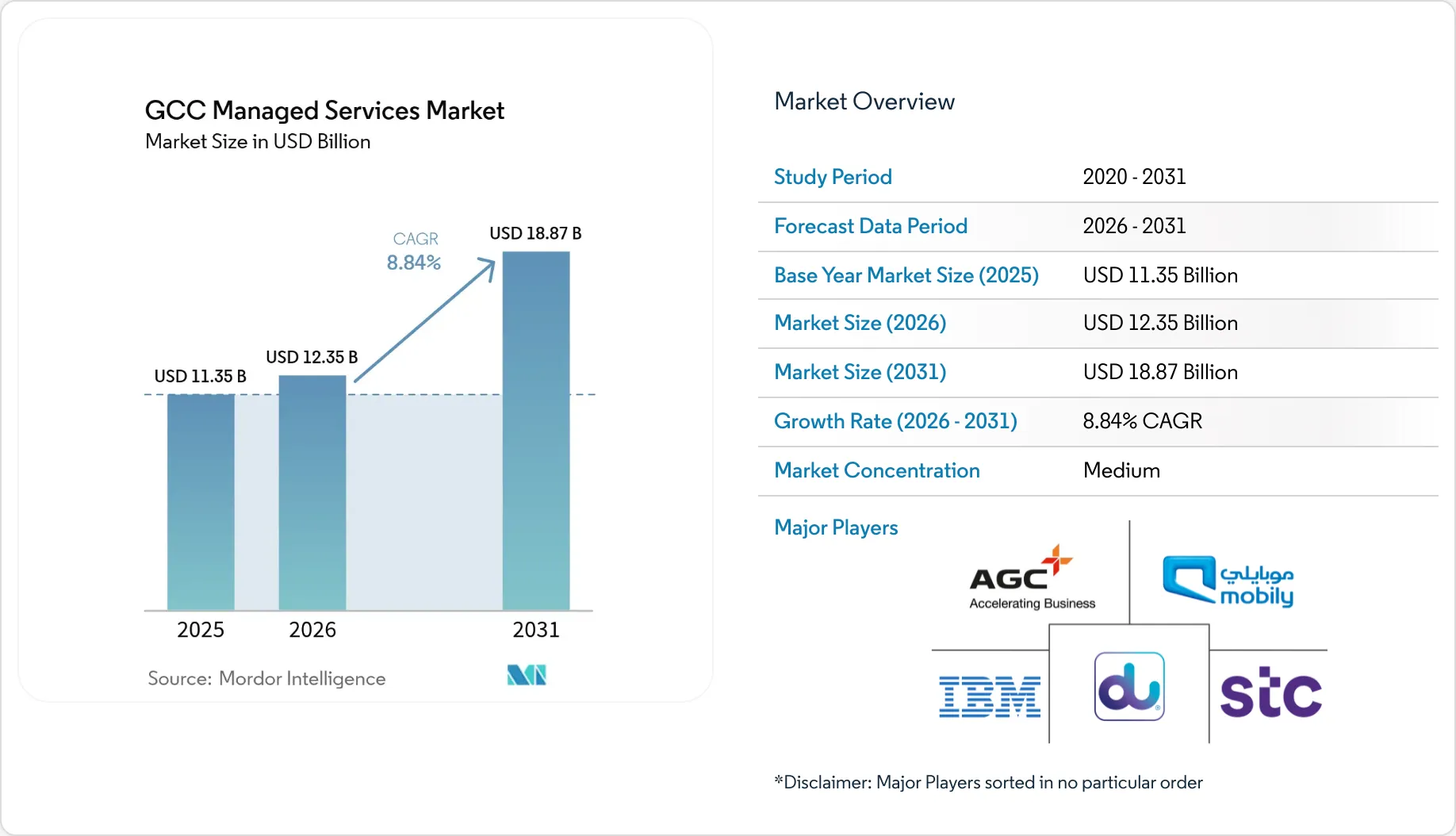
Macroeconomic conditions across the GCC stay broadly supportive of growth. Inflation is anticipated to remain low, with the IMF forecasting typical inflation of 2 percent throughout the region in 2026. Stable prices are helping preserve real home incomes and underpin consumer spending, which Oxford Economics expects to grow by an average of 3.5 percent over 20262027.

Latest Posts
Operational Excellence: a Strategic Pillar for Regional Growth
Emerging Future Shifts Defining the 2026 GCC Market
Predicting the 2026 GCC Business Landscape